Grace Watson
10 September 2020
Media Studies
Audiences and Institutions - Digital Changes to Film Processes/Changes caused by Technology
•
Showing posts with label Audiences. Show all posts
Wednesday, September 9, 2020
Wednesday, August 26, 2020
Monday, August 24, 2020
Audiences and Institutions - Revision Activity Answers
Grace Watson
25 August 2020
Media Studies
Audiences and Institutions - Revision Activity Answers
•
Activity #1:
1. The two financial models that distribution agreements are based on are leasing and profit sharing.
2. The leasing model is where the distributor agrees to pay a fixed amount for the rights to distribute a film. On the other hand, the profit-sharing relationship/model is where the distributor receives a percentage of the total net profits obtained by the movie. The percentage received tends to be between 10-50% of the net profits. With both models, both the studio and the distributor aim to predict which model/method will work best for them.
3. Ancillary rights are subordinate rights which rely on the main right or claim. Such rights may include the right to distribute the movie on DVD, VHS, and cable and network television.
4. The film's 'opening' is the official debut of the movie. Basically, the first time it's released and viewed by the audience. The following factors are taken into account when deciding on the film's opening: studio, target audience, star power, buzz and season.
5. A film is said to have 'legs' if it is able to remain popular and well-enjoyed and supported for a long period of time. If the film lacks any one of the factors listed above in question 4, it stands the chance of not having 'legs'. Buzz, perfect season, A-list actors, reaching the desired audience and having major studio backing are all factors which massively increase the film's chance of having 'legs'. If the plot simply isn't a timeless one, it won't have 'legs'. An example of a franchise whose films have legs is Star Wars.
6. At the time of this article there were 37 000 screens across the USA, with the majority of them being located in urban areas and cities - well populated areas.
7. A 'buyer' is hired by the theater to represent the film theater in negotiations with the distribution company. Large theater chains employ buyers while smaller independent theaters contract with a buyer. The buyers discuss and negotiate terms such as whether they will accept to buy the film or not, where the film will be shown, and the lease terms, such as whether the lease will be done by bidding - where the buyer pays a fixed amount to the distributor for the right to show the film, or by percentage - where both parties receive a percentage of the box office (ticket sales). If percentage is decided upon, the buyer then discusses with the distributor the nut/house allowance amount, the exact percentage splits for both the gross and net profits, the length of engagement etc.
8. A theater can either lease a movie by bidding or by percentage. Bidding involves the buyer paying a fixed amount to the distributor for the right to show the film, whereas percentage means that both parties receive a percentage of the box office (ticket sales). In this case, the two parties discuss the nut/house allowance amount, the exact percentage splits for both the gross and net profits, the length of engagement etc.
9. A loss leader is what the film itself is considered as being to the theater. It's purpose is to attract the audience to the theater, where they then spend money on popcorn and soda - which is what actually keeps the theaters going financially. According to the article, theaters cannot run without the sales of the popcorn and soda - that's where they earn their main income.
---
Research done in Activity #2 has been added to the 'Case Studies' blog post a few posts back.
•
Activity #1:
1. The two financial models that distribution agreements are based on are leasing and profit sharing.
2. The leasing model is where the distributor agrees to pay a fixed amount for the rights to distribute a film. On the other hand, the profit-sharing relationship/model is where the distributor receives a percentage of the total net profits obtained by the movie. The percentage received tends to be between 10-50% of the net profits. With both models, both the studio and the distributor aim to predict which model/method will work best for them.
3. Ancillary rights are subordinate rights which rely on the main right or claim. Such rights may include the right to distribute the movie on DVD, VHS, and cable and network television.
4. The film's 'opening' is the official debut of the movie. Basically, the first time it's released and viewed by the audience. The following factors are taken into account when deciding on the film's opening: studio, target audience, star power, buzz and season.
5. A film is said to have 'legs' if it is able to remain popular and well-enjoyed and supported for a long period of time. If the film lacks any one of the factors listed above in question 4, it stands the chance of not having 'legs'. Buzz, perfect season, A-list actors, reaching the desired audience and having major studio backing are all factors which massively increase the film's chance of having 'legs'. If the plot simply isn't a timeless one, it won't have 'legs'. An example of a franchise whose films have legs is Star Wars.
6. At the time of this article there were 37 000 screens across the USA, with the majority of them being located in urban areas and cities - well populated areas.
7. A 'buyer' is hired by the theater to represent the film theater in negotiations with the distribution company. Large theater chains employ buyers while smaller independent theaters contract with a buyer. The buyers discuss and negotiate terms such as whether they will accept to buy the film or not, where the film will be shown, and the lease terms, such as whether the lease will be done by bidding - where the buyer pays a fixed amount to the distributor for the right to show the film, or by percentage - where both parties receive a percentage of the box office (ticket sales). If percentage is decided upon, the buyer then discusses with the distributor the nut/house allowance amount, the exact percentage splits for both the gross and net profits, the length of engagement etc.
8. A theater can either lease a movie by bidding or by percentage. Bidding involves the buyer paying a fixed amount to the distributor for the right to show the film, whereas percentage means that both parties receive a percentage of the box office (ticket sales). In this case, the two parties discuss the nut/house allowance amount, the exact percentage splits for both the gross and net profits, the length of engagement etc.
9. A loss leader is what the film itself is considered as being to the theater. It's purpose is to attract the audience to the theater, where they then spend money on popcorn and soda - which is what actually keeps the theaters going financially. According to the article, theaters cannot run without the sales of the popcorn and soda - that's where they earn their main income.
---
Research done in Activity #2 has been added to the 'Case Studies' blog post a few posts back.
Monday, June 8, 2020
Technological Changes Essay
Grace Watson
5 June 2020
Media Studies
Technological Changes Essay
•
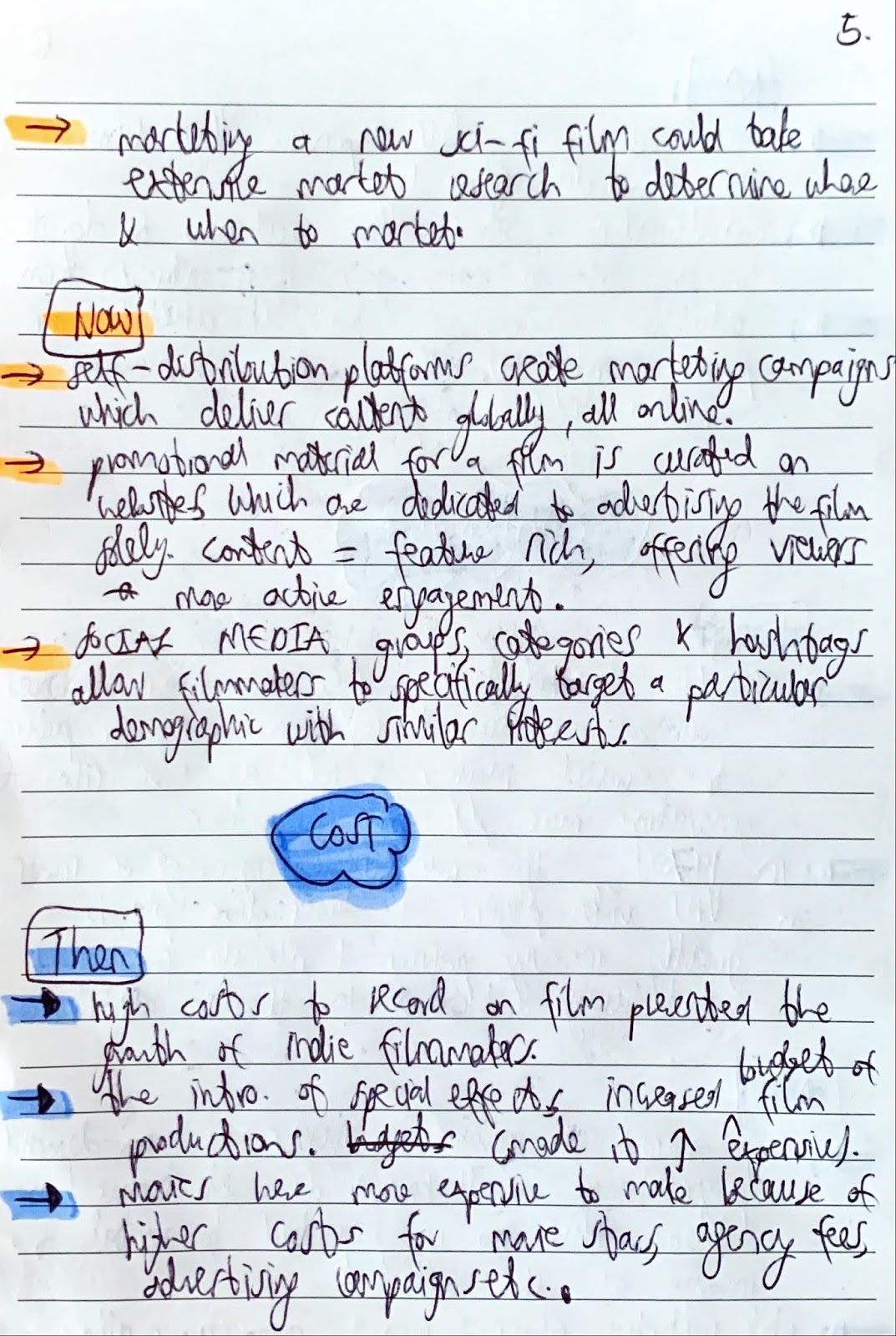
Over time, technology has developed and advanced to a point where nowadays audiences can consume media more easily, hassle-freely, from the comfort of their own homes with every series or movie they could ever dream of watching only a very click of a button away. The constant evolving of technology has caused significant changes in the actual film-making process in all levels of production, whether it be pre-production, production itself, post-production, distribution, marketing or promotion. These changes have had a significant effect on both the audiences of the films and the film industry as a whole.
For over 100 years, the sole way to make a film was using film. The production company would film the shots, send the shots to a printing laboratory, wait a day (called a ‘daily’) and then fetch the film. Once they fetched the film, they couldn’t change what had been shot. For some directors, this process was painful and frustrating because it consisted of enormous, costly systems and unchangeable mistakes. For others, film felt “more tangible”, like “magic”, and they enjoyed the feeling of “did we get anything today?” (because, of course, they couldn’t see what they had filmed straight after filming) in which the suspense excited them.
A classic example of how technology has changed the film industry, is the transition from using film cameras to using digital cameras to capture scenes. Editing transitioned from “cutting and pasting pieces of film”, to “pressing all the buttons”. According to a source, without technology, “it would be nearly impossible for Hollywood to produce the volume of films that it does.” Technology drives “entire segments of film now, enabling movies that were not possible before.” Directors worldwide were initially quite scared of the whole idea of editing on digital, “they thought (that) that’s not editing,” and worried that if they accidentally pressed the wrong button, everything would be ruined. For them, they felt as though editing was rather supposed to be an art form of “manipulating images”, and that simply clicking a button seemed too easy and in-genuine. However, film is impossible to reuse, highly expensive and if shots are not successful, “every” resource used that day is WASTED. These disadvantages “dwarf the authenticity that the film maker is going for,” meaning that the desired vintage feel becomes almost pointless because getting there was way too costly and difficult to obtain. In post-production, the cinematographers must then develop the film which, too, is a costly process. Directors such as George Lucas realised that although the quality on film was fabulous, digital allowed them “to do what” they “couldn’t have done” before. For film makers, the advancement of technology and decision to go digital meant “forgoing the large canisters of film”, meaning less expenses and also less waste. According to Charles Matthau, technology’s “greatest impact is... felt in new cameras that allow cinematographers to shoot in a higher definition.” George Lucas was the first director to film using a digital camera (where he filmed the movie 'Young Sherlock Holmes'). After filming with the digital camera, he instantly claimed that he wound never shoot with film again. George Lucas began to explain that the highest point of film had been reached, and that digital was filled with so much more to discover, encouraging other filmmakers to join him in the using of digital technology. And with all of that, the use of digital began to rise.
“As well as enjoying the higher definition made available by digital cameras, many directors also enjoy the ability “to be able to review” their “work as it’s produced” so that they know “what the final product might look like;” an example of this being director Robert Rodriguez who is famous for getting his shooting done “rather quickly” and then watching it to make sure he got some great shots, according to a source. Completing shooting at a great speed, having less finance needed for purchasing large film cameras and editing footage more easily and quickly digitally are all possible thanks to the change caused by technology.
Adding special effects to a film in editing is a painstaking process that editors no longer go through “thanks” to technology and digital. With digital, the “end result is a piece of film that looks cleaner, with effects that blend seamlessly with the movie.”
Similarly, in the actual shooting/filming process, more is done in less time in the sense that “shooting digitally” makes it easy to “shoot multiple takes, and to get multiple angles more economically.” According to Charles Matthau, coupled “with the new steady cam equipment that film has taken liking to, the end result is a more intimate and desired shot,” where the audience “feels present in the moment because the lens” they are “allowed to look through feels authentic” rather than “vintage”.
Directors from the Side by Side documentary explain that they actually benefit from the constant debate regarding whether film is dead or not and the competition “to improve digital cameras”. These new digital cameras are lighter and more comfortable to set up, carry and pack away as opposed to the large and bulky film cameras. Many directors in the ‘Side By Side’ documentary on YouTube explain how they now feel able to “make movies in a small, private way,” feeling less intimated by a small and light digital camera than what they would’ve felt with a massive, bulky and complicated film camera. Similarly, three-dimensional technologies made available by digital and technology allow the editing team to capture the most “exquisite images”, such as characters, and place them into the scene even when they aren’t really there. For example, 3D was used in ‘Fast & Furious’ to superimpose Paul Walker’s image onto his brother’s body soon after he passed away. Without this ability, the producers of the film would sit with a major issue in terms of continuity and verisimilitude between films - without it audiences may have questioned what had happened to Walker’s character in the film, where he was, etc. Thanks to technology, algorithmic videos can now be added to shots in the editing process as well to further enhance the film and captivate the audiences. An example of where this was used is in the film ‘We Own The Night’ where the pouring rain was actually added completely in post-production. A few years ago this would never have been possible, therefore the scene may have been far less captivating and interesting for the viewer.
Over time, there has also been an increase in the number of platforms available for audiences to consume the media. This increase has been thanks to the development of technology. Platforms available now include YouTube, Netflix, Disney Plus, Neon, DVD Stores, the news, linear television etc... there are so many options. Where before audiences were UNIFIED, they are now fragmented, consuming the media from all different platforms with endless options available for them to watch. Not only has the number of platforms increased, but the number of visitors to cinemas has actually decreased where audiences now claim that they prefer watching movies from the comfort of their own “home”, where they can chose exactly what they want to drink and don’t have to stand in long “queues” before enjoying the movie. Directors realise that the cinemas are no longer as special anymore and that rather they have become “just another thing”, one director even explaining how he’ll never understand “why people want to watch movies on their computers.” Although directors such as Keanu Reeves do not understand this way of consuming the media, and believe that in that way “you won’t be able to feel it”, the audiences simply seem to prefer it that way, reverting to SVOD services such as Neon which’s subscriber growth went “BOOM!” according to a source. Slowly but surely, many of them are becoming aware of the fact that “digital projection has come a long way,” and that “the more people use it, then better it gets” (George Lucas).
Thanks to Web 2.0, audiences are now active consumers rather than passive consumers. Once consuming the media, they post reviews, comments, likes, dislikes, they spread the word (whether it be positive or negative), and because of all of the above, film makers have to think very carefully about where and how they actually release their films in order for them to be successful. In this sense, audiences are actually “changing the way films are being made.” An example includes BananaMana Films’ release of ‘Perfect Girl’, a digital series on Netflix which maintained a relatively low $1000 budget and yet reached such high successes that it is still getting distribution deals today. This film reached a “niche audience which many in the industry had not thought possible,” proving that finding a niche market and targeting a specific audience has become vitally important for a films success.
Social media allows “filmmakers to find an audience globally and grow it.” More and more, filmmakers are posting trailers and snippets from their films onto platforms such as YouTube to build up buzz and hype - excitement and anticipation - within the audiences for it, opening “an avenue for great audience involvement”. YouTube users now almost advertise the films for the companies by simply liking the post, “helping others to find new and interesting content without spending too much time digging for it.” Where before films would have to put an advert in the newspaper or TRY find a way to advertise their films successfully, technology and the use of platforms such as YouTube have simplified this process of promoting. Advertising and marketing through large blow-up billboards, online adverts on apps such as Instagram and Facebook etc allow companies to spread their awareness and gain popularity more easily, and the rise of technology has also meant that even the actual filmmakers are able to grow and rise within the filming industry. Jermaine Clement and Taika Waititi, for example, were normal, young NZ directors who are now famous in the USA, with Clement taking on the role as being the crab voice on ‘Moana’, a Hollywood blockbuster which reached $643.3 million on Box Office. Because of technology, the two directors were able to releasr their film ‘What We Do in the Shadows’ internationally in the FIRST place, which then enabled them to grow personally in their own roles, as well as their film reached GREAT heights, receiving ...likes on Facebook despite its being an Indie film. Basically in a nut-shell, technology creates opportunities for growth and development for both the films and those that make the films.
Despite all of its great advantages and advancements, technology has also brought about increased pressure in terms of competition. Films are now, more and more, being sent worldwide (even INDIE films) to audiences all over the globe. This means that films are now competing with each other to receive the audience views. The use of technology can be used to increase awareness of their film, however because Web 2.0 has leveled the playing field, film makers must be wise and entrepreneurial in how they go about their promoting of their film.
According to Charles Matthau, “digital promises an exciting new world of distribution.” During the distribution stages, simultaneous releases (where film makers release their films in cinemas and online streaming services (SVODs) such as Netflix simultaneously) are now becoming more common. With the rise in technology, companies seem more willing to distribute their films online, and therefore the rights to these films can be dealt with digitally - this means with quick communication internationally. Additionally, technology has made possible crowd-funding where films are able to set up funds and websites online for people to donate. The money donated is used to fund the film. Most people have cell-phones, their bank accounts connected to their phones, and so therefore they can easily pay and contribute to these funds if they would like too. ‘What We Do in the Shadows’, an NZ indie film, is an example of a film which was crowd-funded, and in this case, the directors easily met their production costs of $1.6 million thanks to all the audience donations.
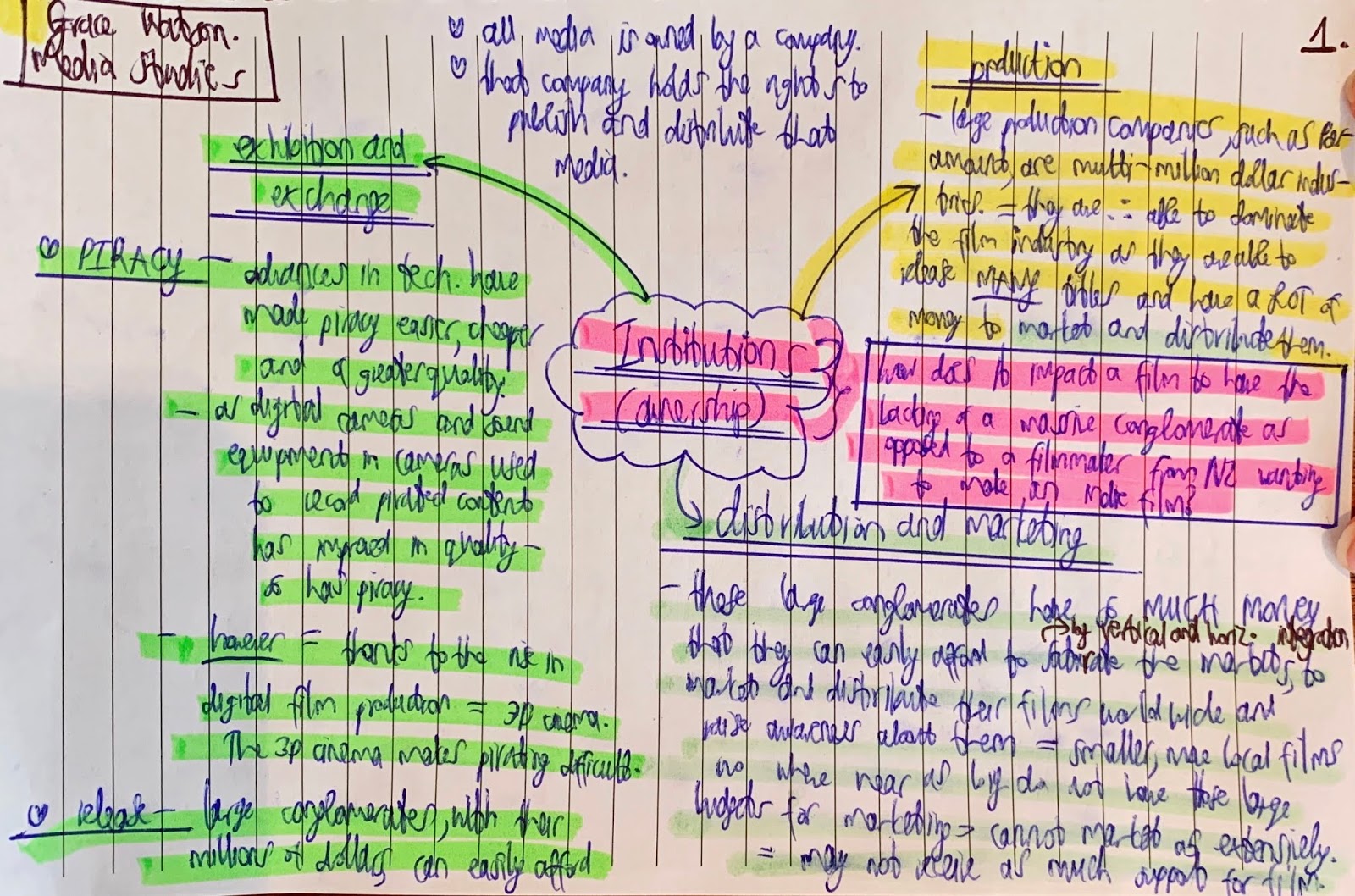
The rise of large conglomerate companies which own many subsidiaries dominate the film industry in Hollywood. Through both vertical and horizontal integration, they saturate the media with adverts and information about their films. An example of vertical integration is Disney’s purchasing of Fox, another production company, for $2.9 billion, and an example of horizontal integration is Disney's owning and running of Disneyland and 'Star Wars Land'. Both of these forms of integration enable Disney to spread it's name far and wide, as well as promote itself through saturating the market, filling every area of the media. The conglomerates' dominating of the market also increases competition and makes it more difficult for smaller Indie and NZ films to prosper. This is why technology has been such a massive advantage to these films. With the rise in technology, production companies of all levels are able to INCREASE the quality of their film, they can film in rain with water proof cameras and can edit more easily.. there is no need to cut and paste film as discussed above. The playing field has been leveled and now, more than ever, the advantage of the large conglomerates no longer means no hope for Indie films.
Where before reels of film were stored in large warehouses for up to seventy years, the use of digital now means that the footage is not always exceptionally well preserved. It may even end up being lost. Where for some directors this is a worry, for others it’s a case of what’s “important to human beings" will be preserved as best as possible, and what is lost... is just “part of life”.
With all of the above said, it is clear that it is not the equipment used, but rather the actual story and how it is told that's most important. If technology “is used just to show off, then audiences won’t be impressed.” No matter what changes in the process, whether it be the equipment used to film, the distribution process, the promoting and marketing campaigns etc... whatever it is that changes, that is not the most important thing.
Digital development has somewhat “leveled the playing field”, and now anybody can make their own movie, “everybody’s able to do whatever they wanna do”. Despite the 'leveling', producing an excellent film is 100% a gift and talent. “Everybody and his little brother has a pencil, but how many great stories are on that piece of paper?” When the filmmakers are doing something they love, filming something they are passionate about, a great story.... then, what they use to film actually does not matter!
2455 words
Thursday, June 4, 2020
Technological Changes Essay - Planning
Grace Watson
5 June 2020
Media Studies
Technological Changes Essay - Planning
•
Planning:
Opening statement:
•
Planning:
Opening statement:
Over time, technology has developed and advanced to a point where nowadays audiences can consume media very easily, hassle-freely, from the comfort of their very own home with every series or movie they could ever even dream of watching only a very click of a button away. This constant evolving of technology has caused significant changes in the actual filmmaking process in all levels whether it be pre-production, production, post-production, distribution, marketing and promotion... a classic example of this being the transition from film to digital cameras, and these changes have had a significant effect on both the audiences of the films and the film industry as a whole itself.
- increase in the number of platforms = Youtube, DVD Stores, news, streaming services, Netflix, Neon, Disney + etc etc = sooooo many options! Films have to think CAREFULLY about where they actually release their films.
- Where many years ago films were filmed predominantly using film cameras, movies are nowadays filmed using digital cameras - change in the actual production process.
- Where before audiences were UNIFIED, they are now fragmented - all different platforms with endless options available for them to watch. (CONSUMPTION)
- Audiences are now active consumers rather than passive consumers = thanks to Web 2.0.
- With distribution - simultaneous releases are now becoming more common as advertising and marketing allows companies to spread their awareness and gain popularity more easily. Talk a bit about crowd-funding - able to set up funds and websites for people to donate to find the film. This is more attainable with the internet and Web 2.0 = people all have cell-phones - bank accounts connected to phones = can easily pay and contribute. Before, they would have to put an add in newspaper or TRY find a way = was far more difficult.
- Pressure has risen in terms of competition. Films are now, more and more, being sent worldwide (even INDIE films) to audiences all over the globe = films competing = use technology to increase awareness of their film.
- Examples = “What We Do in The Shadows” -> how they had a Facebook page (how many likes did it get?) | competitions | crowd funded | was a HUGE success - even as an INDIE film!!!
- rise of technology has meant even the actual filmmakers are able to grow and rise in the industry = example Jermaine Clement and Taika Waititi = they were normal, young directors who are now famous in the USA (one as the crab voice on Moana - give the stats to this film) = because of technology which enabled the film to be sent internationally in the FIRST place, they were able to grow!!
- Rise of conglomerates and their dominating of Hollywood = talk about subsidiaries, vertical and horizontal integration and how their dominating also increases competition and therefore and support. Talk about how the rise in technology has enabled production companies to INCREASE quality of film = can film in rain (water proof cameras). = can edit more easily = no need to cut and paste film.
Saturday, May 16, 2020
Synergy and Cross-media-convergence Essay
Grace Watson
17 May 2020
Media Studies
Ownership H/W Essay 2 - Synergy and Cross-Media-Convergence
•
Cross-media-convergence and synergy are exceptionally important and detrimental to the level of success of a film. Films by large conglomerates such as Disney are so successful, quite often thanks to synergy and cross-media-convergence they use.
This is proved, firstly, by comparing the overall success of large Hollywood blockbusters which have been marketed and promoted through the extensive use of synergy and cross-media-convergence in comparison to the smaller, less wealthy Indi films such as ‘Broken’ which are not promoted through such synergy or convergence.
Disney is a large conglomerate company which owned 26% of the studio market share in 2018. In its ownership are numerous subsidiaries such as ‘Fox’ (acquired by Disney for $2.9 billion in 2001), ‘Marvel’ (acquired by Disney for $4 billion in 2009), ‘ESPN’, ‘Disney Channel’ and the numerous ‘Disney Parks’ such as Disneyland and DisneyWorld. Disney is able to penetrate markets and easily distribute its films worldwide through vertical and horizontal integration. An example of its vertical integration is its purchasing of Fox, another production company, for $2.9 billion as discussed above, and an example of its horizontal integration is its owning and running of Disneyland and ‘Star Wars Land’. Both of these forms of integration enable Disney to spread its name far and wide, as well as promote itself through saturating the market, filling every area of media and thereby guaranteeing its movies’ chances of success.
Disney uses both the companies it is integrated with and the subsidiaries it owns to produce items of synergy such the ‘LEGO Jurassic World’ video game which was released shortly after the film on the 12th of June 2015 (and is now available on numerous platforms such PlayStation 3 and 4, Xbox One, Nintendo Switch etc) and the Jurassic World LEGO sets which sell for between $30 and $500+ on ‘ToyCo’. Disney imprints logos, pictures, drawings of characters from the film, quotes from certain characters etc onto different objects for sale, such as phone cases, water bottles, t-shirts, sweat pants etc., an excellent example of this being the children’s series ‘MickeyMouse’ which has been further promoted this way. Toy light-sabers symbolising those from ‘Star Wars’ are a huge hit - children LOVE the idea of pretending to be in the movie, challenging their friends to a light-saber fight.
All of the above items and example of synergy advertise the company and it’s films further.
Another major, most important, example of Disney’s synergy and cross-media-convergence, is its game parks! There are six Disney resorts worldwide located in California, Florida, Tokyo, Paris, Hong Kong and China and a total of twelve Disney parks. The Disney parks generate massive income and promotion for Disney, and include various rides which interest all the different ages and stages of life; ‘Star Wars Land’ for those who love Star Wars, ‘Cars Land’ for the younger boys, Princesses roaming around and adored by the little girls and lots of food and fast roller-coaster rides for the teens and adults. These ‘Disney Parks’ are massively supported, averaging around 157 311 million visitors in 2018 alone according to a source. Audiences watch the Disney films, visit the game parks, enjoy the rides, buy merchandise such as ‘MickeyMouse’ ears or ‘Cars’ t-shirts and then go home and watch the Disney films again, raising Disney’s overall income and the films’ success.
A classic Disney film is Moana, an animated family film released on the 23 of November 2016, adored by 90% of the reviewers on Google. In this film, Disney casted famous stars such as Dwayne The Rock Johnson and Auli’i Cravalho who are both exceptionally well-known who then assisted in the advertising of the film on their separate social media accounts where Dwayne Johnson has 183 million and Auli’i Cravalho 657 000 Instagram followers. Every time either one of them posted ANYTHING about the film, it was instantly being promoted to THOUSANDS and MILLIONS of people. Moana’s box office numbers equate to a massive $690.8 million USD, proving the success of Disney’s cross-media-convergence with this film.
Another example of Disney’s cross-media-convergence is it’s recording and then releasing of the songs from ‘Frozen’ and ‘Frozen 2’ onto music streaming services such as Spotify and YouTube for families to enjoy. Each listen generates income for Disney as well as further promotes its films and their success. Disney has done this for many of its films.
Overall, Disney’s extensive synergy and cross-media-convergence has become on of its greatest advantages. As of 2018, Disney now occupies a whole three quarters of Box Office, with the three highest grossing films in the USA in 2018 all belonging to Disney... Black Panther ($700 million on Box Office), Avengers: Infinity War ($679 million on Box Office) and Incredibles 2 ($609 million on Box Office). This proves that synergy is exceptionally important in the success of a film - it builds awareness of what you offer and convinces people to try it out.
Where before only Hollywood blockbusters really excelled, Internet has actually levelled the playing field to some extent. Synergy and cross-media-convergence have almost been overcome by the internet. Traditionally, Indi films had and still have lower production budgets and less finance available for them to integrate with other companies and afford the extensive advertising of their film, which is why Blockbusters have mainly excelled previously. However, the rise of the internet revolutionised the way in which we consume media with 4338 billion of the world’s population now being connected to the Internet today. Before the internet, choices were limited and audiences of media were unified, however due to fragmentation audiences are no longer unified but rather split across many different platforms whether it be Youtube, Netflix or Hulu. Millions of people consume media daily, with Netflix having over 75 million users worldwide in 2016 and Neon experiencing a “BOOM” in subscriber growth according to a source, with there being 3.81 billion social media users worldwide today. This has also meant that today films can be advertised online. NZ films, Indi films, large blockbuster films, Hollywood films, art-house films.... they’re all advertised online today with social media and the internet booming in numbers. ‘Broken’, an NZ film (one of my case studies) was too, advertised online with its trailer being released on Facebook, and its Facebook page receiving 23 277 likes. Additionally, ‘Moana’ was also advertised on Facebook receiving 2 441 583 likes on Facebook. Films use their Facebook page as an avenue to interact with their audiences, spread the word of their films and create awareness. The internet and all its SVOD services provide a perfect channel for companies to communicate with other companies in forming vertical and horizontal integration partnerships as well as discuss items of synergy hassle-freely online, no matter how far the two companies are from each other. The internet is an easy, FREE way to advertise a film and is therefore also perfect and suitable for Indi films which have lower production budgets. Another pro of the internet is Web 2.0, where the internet now enables the audiences to interact with the media, to become active viewers and no longer passive. To not only be consumers of the media, but producers of it, too. It has caused the change from static web pages to dynamic or user-generated content and growth of social media. Audiences can now post reviews, comment, reshare, like, dislike. An example of this being the art competitions that were held online by “What we do in the shadows”, a Facebook page which reached ... likes - it attracted the viewers’ attention, stimulated interest and grew the films brand.
Although synergy is definitely a high advantage, smaller Indi films can now do well despite their lack of synergy. An example of this is the New Zealand film directed by Jermaine Clement and Taika Waititi, “What we do in the Shadows”. Just like many Indi films, the production team of this film had a low production budget of $400 000. They were unable to reach that amount on their own and were not funded by a large production company, and so therefore funded the film through crowd-funding, reaching the target and receiving the green light. The film was a MASSIVE success, grossing $6.9 million worldwide, and becoming the basis of two spin-off TV series’ that are currently being filmed. Both directors who were not very famous back then have grown into major Hollywood figures, with both being apart of the massive Hollywood Blockbuster, Moana - Jermaine Clement becoming the voice of the crab in the film. This film is an example of a regular NZ, Indi film which was able to reach great heights despite it not being funded by a production company.
The directors of this film had an excellent marketing strategy: they predominantly used the internet to advertise their film. They were funny online, posting jokes and humorous slogans on their Facebook page to generate interest. They did interviews with ANYONE who asked, leading people to believe that they were kind and humble, then causing them to support the film. They changed the city sign from “Wellington” to “Vellington”, an excellent marketing idea, as thousands of people drove past that sign daily and would most probably have researched what it meant and what it was all about. The marketing team of this film successfully generated hype and buzz for their film by keeping their audience engaged, reaching 197000 hits/likes on Facebook.
Ancillary rights have lead to simultaneous releases where companies now release films on both SVOD services and the cinema at the same time. As proven by “What we do in the Shadows”, anyone can actually release a film on SVOD services such as Netflix, for example, and excel. However, it still remains that it is far easier for large conglomerates such as Disney to succeed as they have sufficient funds to advertise more extensively through partnering with other companies such as Warner Bros - generating a larger awareness of their product which may be difficult for Indi and NZ films to compare to.
In NZ specifically, a government agency known as the NZFC assists, supports and funds a certain number of smaller Indi and local NZ films per year, assisting them to overcome this threat or intimidation caused by the large Hollywood blockbusters and conglomerates, making available to them opportunities to partner with other large companies to form items of synergy and cross-media-convergence. With New Zealand’s population being a low 4.886 million in 2018 compared to the USA’s large population being of 328.2 million in 2019, the large Hollywood films already have a larger audience to promote their movies to, whereas the Kiwi films may receive less support because of a smaller population. According to its website, the NZFC balances “both cultural and economic objectives to achieve successful outcomes for our industry and our people,” to assist in fighting this problem. It’s bottom line is NOT to make MONEY, but rather to promote and develop NZ’s local talent and the country as a whole, to overcome the problem of having a smaller population, to stimulate the economy and to improve tourism. The films it supports generally discuss cultural and ethnical issues, as well the Maori culture, which consequently spark thinking within the viewer. This is uncommon in Hollywood with most of their films having “typically successful” plot lines which the producers know generally do well. The NZFC has supported films such as “The Game of Thrones” and “Daffodils” which have both been successful WORLDWIDE, with “The Game of Thrones” being of $2.28 billion in worth! This, along with the film “What we do in the Shadows’ discussed earlier which grossed $6.9 million proves that despite their lower use of synergy and cross-media-convergence, NZ films are still able to be very successful. An example of horizontal integration and cross-media-convergence in NZ, is the collaboration that took place between Air NZ and “The Hobbit” film, where they produced an in-flight safety video which also flaunted New Zealand’s beautiful scenery. This clip was seen by thousands worldwide, receiving more than 12 million global views online. The clip was beneficial to NZ, “The Hobbit” film, and Air NZ. It exelerated tourism with more people flying, therefore more people using Air NZ and therefore benefitting Air NZ, as well as it advertised the film.
The NZ government can further advertise films by collaborating with companies such as toothpaste companies (Colgate) to form adverts on television. Perhaps the tooth fairy is flying from home to home to fetch the children’s teeth, displaying New Zealand’s scenery as the fairy flies, for example.
In my personal opinion I believe that people watch what they know most about... If they don’t know about a movie, how can they watch it? This is precisely why films by large conglomerates such as Disney do so well - they are extensively marketed, advertised and promoted and therefore audiences know so very well about them and their films. One hears about them on Spotify, Youtube, Instagram adverts, Facebook, the Instagram accounts of influencers (such as ‘The Bucket List’ family who have 2.4 million followers on Instagram and are paid to post pictures about Disney films). A source from DGNZ was quoted saying, “Like the Australians, we do generally struggle to get NZ audiences to NZ films.” The fact that the markets are being completely saturated by the Hollywood blockbusters, makes it more difficult for smaller NZ, and Indi films in general, to obtain substantial success. Large Hollywood blockbusters such as ‘Jurassic World’ and ‘Moana’ which have massive production and marketing budgets of $150 million USD and between $150-175 million respectively seem to do more successfully than Indi films which have much smaller budgets such as “What we do in the shadows” with a $400 000 production budget. Jurassic World went on to gross over $500 million USD. This means these Hollywood films have spent much more money on promoting and marketing their film and spreading its awareness, proving my point - the more a film is advertised and promoted through synergy, the more successful it ends up being! The smarter the marketing strategy, the higher the success.
In conclusion, although the rise of internet has levelled the playing field to some certain extent, the use of synergy and cross-media-convergence are definitely beneficial in raising the level of success of a film and are therefore a great advantage to larger production companies and conglomerates such as Disney which have the large funds to afford them.
2403 words
2403 words
Tuesday, May 12, 2020
Ownership Essay
Grace Watson
13 May 2020
Media Studies
Ownership Homework Essay 1
•
Films owned by large Hollywood firms and/or production company’s instantly have an advantage in the market at becoming successful. However, despite Hollywood’s advantage and it’s dominance in the film industry with all its finance to saturate the markets and get their products out there, it is not at all impossible for normal, smaller Indie and New Zealand films to get their names out there and their numbers up, too.
Hollywood is the hub of film and consists of MANY large production company’s which have immense finance available to them for marketing their film. Disney, a conglomerate which owned 26% of the studio market share in 2018, is an example of one of these large production companies. In 2018 all three of the highest grossing films in the USA were produced by Disney alone, these movies being Black Panther ($700 million on Box Office), Avengers: Infinity War ($679 million on Box Office) and Incredibles 2 ($609 million on Box Office). One quarter of all tickets sold at Box Office were for Disney film’s in 2018. As visible in the above stats, the movies of these large conglomerates are mostly always successful with large Box Office numbers. This is because they use their large sums of money to saturate the markets, filling the possible audience’s media with adverts, trailers, q&a’s, pictures, posters etc across the numerous media platforms such as YouTube and Instagram to publicise their film. Also, they are already well-known and so people already have an awareness as to their films before they even have to extensively advertise because of their built up reputation. Disney, along with other conglomerates such as Sony/Columbia (which had 10.9% of the studio market share) and Warner Bros. (which had 16.3% of the studio market share in 2018) own many subsidiaries. Some of Disney’s subsidiaries include Marvel (which Disney purchased in 2009 for $4 billion) and Fox (which Disney purchased for $2.9 billion in 2001). Films which are owned by large production companies have a greater chance of guaranteed success because the production studios earn so much revenue from the owning of all the subsidiaries, which they can use to advertise the film. An example of this is one of my case studies, Jurassic World, which had a production budget of a massive $150 million USD because it was funded by four massive production companies. With such a large production budget, the company could go to such extents to advertise the film, assisting them in becoming exceptionally successful in Box Office.
As discussed above, the Hollyword films saturate the markets, creating great competition for the smaller Indi films which die not have such wealth. However, despite this competition, there are indeed Indi films which end up very successful internationally. An example of this is the film “What we do in the Shadows”, a New Zealand kiwi comedy film directed by Jermaine Clement and Taika Waititi. Despite their lack of funding from a large production studio, these two directors managed to advertise the film and make it successful. It was funded through crowd funding where both directors appealed to New Zealand to raise the funds that they needed to make the final product. The sum required was $400000 which together they managed to acquire before receiving the green light. The film was a massive success, proved by its total gross of $6.9 million worldwide and the fact that it is the basis of two spin-off TV series’ that are currently being filmed. Today, both directors who back then were neither well-known nor experienced have become famous and done really well, with Jermaine Clement becoming the voice of the crab in the film Moana, a film released from the USA. ‘What we do in the Shadows’ is a prime example of a regular NZ, Indi film which was able to rise to the top in success, proving that despite its type of ownership and financial value, its success was definitely possible.
In New Zealand there is a government agency called the NZFC. According to the NZFC’s website, it balances both “cultural and economic objectives to achieve successful outcomes for our industry and our people”. The NZFC has supported films such as the Hobbit and The Game of Thrones, and in 2018 the agency supported another 17 films. Three out of seven of the documentaries were directed by first-time directors. The NZFC’s bottom line is to promote NZ’s talent and the country as a whole to stimulate the economy and improve tourism. This is because it is government owned. Their bottom line is not to make money, therefore their films are often based on cultural, New Zealand stories and the Maori heritage, discussing ethnical and cultural issues to spark thinking within the viewer. On the contrary, however, are large conglomerates which have the sole aim of making money. These large film owners only support and produce films that fit the typical “successful film” plot line that will make them money. They only really worry about making a movie entertaining and stimulating for the audience to maintain a great reputation and improve their sales and success. They are not as much worried about forming plots about culture and ethnical issues if it doesn’t seem to generate a lot of income. Where the NZFC is willing to employ first-time, up and coming directors, large conglomerates and large film owners usually only chose directors who have experience and can, once again, lead their film to obtain large amounts of finance.
Because large films deliberately focus on forming plots which fit the typically successful plot lines and which they know will be adored, they usually do remain successful. However despite their success on Box Office, they lose a sense of deepness. Their success poses a problem for the possible support of Indi films by independent film producers who may not go the route of only sticking to typical plot lines.
A source from DGNZ in New Zealand discusses how “Like the Australians, we do generally struggle to get NZ audiences to NZ films.” People watch films which have the most publicity, and the films with the most publicity tend to be the large, popular Hollywood blockbusters, such as Jurassic World which was directed by Colin Trevorrow and funded by four major production companies (one being Universal Pictures). This film grossed over $500 million USD. Their massive funding enables them to obtain massive success.
Just as they have the finance to saturate the markets (even with prequels and sequels, such as ‘Star Wars’ and it’s chain of movies) in the distribution and marketing stages and advertise their films well, large conglomerates and production companies of Hollywood blockbusters also use their wealth for vertical and horizontal integration, for cross media convergence and to form items of synergy. By vertical and horizontal integration, they are able to penetrate markets and easily distribute their films worldwide. An example of Disney’s vertical integration is its purchasing of Fox, also a production company. An example of its horizontal integration is its owning of Disneyland. An example of it’s cross media convergence is when Disney partners with famous singers to sing the songs of certain movies, and then publishes those songs onto music streaming devices as a form of further promoting their film. Disney also prints pictures of characters from their movies onto objects such as pencil cases, duvets, phone covers etc. A few specific examples of this are the numerous Mickey Mouse water bottles based on the Mickey Mouse children’s series on Disney Channel, Disneyland, Cars Land, light-sabers (children’s toys) etc.
Synergy and cross media convergence, vertical and horizontal integration all further publicise these films, increasing their wealth as well as the films success (each item brings them money when sold). In comparison, smaller, more local films which are nowhere near as large and do not have as large budgets, cannot market as extensively and therefore may not receive as much support for their film. They are not as capable to have synergy or cross media convergence because they have less finance available to afford it. Where ‘Jurassic World’, a Hollywood blockbuster, had a massive production budget of $150 million USD, ‘What we do in the Shadows’, a NZ film, had a low production cost of $400000 which for them seemed massive! A lack of synergy can mean fewer sales because of less awareness.
With saying that though, smaller NZ films can still do very well despite their lack of synergy. An example of this is once again the film ‘Why we do in the Shadows. For this film, the directors were excellent in using the media, which is completely FREE, to advertise their film! They had two of the vampires from the film pop up in public areas to generate publicity, they changed the city town name on the hill from “Wellington” to “Vellington” (a GREAT idea as every person who drove past that sign would’ve researched what it meant - advertising), they did interviews with ANYONE who asked, which lead people to believe that they were lovely and humble - causing them to support the movie, they were also funny online, posting jokes and humorous slogans on Facebook to create laughter. All of the above kept their audience engaged and generated hype. Their Facebook page alone had 197 000 hits/likes. This successful marketing campaign is what assisted them in reaching their large success. The film grossed $3.4 million in NZ, $3.5 million internationally and, as discussed earlier in the essay, $6.9 million worldwide. Compared to large blockbusters in Hollywood, this is amazing, and proves that it is not only cross media convergence and synergy which leads to success.
When observing information about films, it tends to be the case that the marketing strategy has a MASSIVE role in the films success. Just as the ‘What we do in the Shadows’ film did so exceptionally well due to its marketing campaign, the film ‘The Dark Knight’, too, excelled, probably thanks to the wisdom and creativity of its marketing team. This film had the most advanced pre-sale tickets ever, with opening night, morning, midnight, 3am and 6am showings all completely sold out, and the film grossing top of the year.
Where many years ago only Hollywood films would do really well, nowadays Indi films can too, soar. This could be thanks to the internet. The development of the internet has completely changed and revolutionised the way in which we consume media. Today 4338 billion of the world’s population are connected to the internet. Before the internet, there was limited choice and audiences were unified. Nowadays, the internet has lead to fragmentation in which audiences are now split across many different platforms, whether it be YouTube, Facebook, Netflix or Neon. On each platform are various film options, meaning that international films have become more readily available and therefore more supported. Millions of people consume media using various SVOD services such as Netflix which had over 75 million users worldwide in 2016 (a number which has CERTAINLY increased) and Neon which experienced a “BOOM!” in subscriber growth, according to a source. Films are also advertised online, such as the NZ film ‘Broken’, another one of my case studies, which had it’s trailer posted on Facebook.
Larger, wealthy firms just simply tend to have advantages in all stages of production. As mentioned above, they usually have large budgets and can therefore afford great technology to produce media of fantastic quality. They can include sound effects and transitions which grab the viewer’s attention and lead to an enjoyable movie experience. Great quality satisfies and attracts viewers and therefore success, whereas the lower quality of a film, such as the film ‘The God’s Must Be Crazy’ may put people off that film - many Indi films may not be of the best quality in terms of focus, sound and sound effects - lack of finance for it. In terms of exhibition and exchange, the larger films once again have an advantage because of their finance. They can easily afford to release their films massively word-wide, such as ‘Jurassic World’ which was released in over 60+ countries on the 10th of June and then in the USA on the 12th, whereas smaller Indi films such as ‘Shiftly’, was only released to 51 points initially. Individual movie producers may not have the finance to compete, leading to their lack of success. The fewer cinemas the film is sent to, means the less support it will receive. Another advantage that larger Hollywood films have is the fact that they often have famous, well-known cast members, such as Brad Pitt, who have a large social media following which can instantly be used as a platform for advertising. As soon as the possible viewers find out that he is in the film, they may instantly gravitate to watching it, as opposed to an Indi film in which they do not know any of the characters. ‘Jurassic World’ had Chris Pratt, a well-known actor with 28.6 million followers on Instagram, acting as one of the characters. His large influence on the media may have contributed to the large number of sales the movie obtained, where it became the first film to ever goss over $500 million USD. However, despite the Hollywood films’ advantages, smaller, Indi films can still experience success in the marketplace, as discussed earlier.
In terms of distribution, larger films either already have a production company distributing their film right from the get-go, such as all of Disney’s films which are distributed, advertised and marketed by Disney, of course, or they find it quite easy to find a distributor as many distributors are in favour of distributing large films as opposed to smaller Indi films, as they are more sure that they will be paid and that the film will actually be successful in the market place. With all Indi films there is more of a risk for the distributor as there is a possibility of them not being very popular in the end. For example a distributor is more likely to take on a film such as ‘Jurassic Park’ as they are away of its prequel, ‘Jurassic World’ and how well it did, than what they would be to take on another ‘random’ film. For Indi film producers, there is always the option of self-distributing the film, which is something that is becoming more “common” according to a source. This source discussed how ancillary rights have become so important in the distribution stage of production that many movies are now doing simultaneous releases where they release their film onto both SVOD services and the cinema at the same time to increase sales and therefore success. Both Indi, NZ and Hollywood films can do just that, and therefore they all have the equal opportunity. However, because of its great dominance and finance, Hollywood affords these services far more easily and therefore has an advantage at attaining the success. Films can also go to film festivals or hire sale agents to distribute their film, each with disadvantages and advantages of their own. Examples of film distributors in New Zealand include Sony Pictures NZ and Limelight Distribution. Despite Hollywood having the advantage, NZ films can actually be just as successful. This is proved by the fact that the film ‘What we do in the Shadows’, an NZ film, was distributed by ‘Madman Entertainment’, an NZ distributor, and ended up doing so well.
Piracy affects the success of films under all kinds of leadership. It effects Indi films, such as Broken which, according to Josh Campbell the director, has been pirated about 200 000 times, as well as it effects Hollywood blockbusters such as ‘The Interview’ (another case study) which has been pirated thousands of times on an illegal saint called ‘TorrentButker’. On Christmas Day alone in 2014, it was pirated 750 000 times!
In New Zealand specifically, the illegal downloading of films has decreased, however in countries all around the world, this value seems to be rising, specifically in the USA where it has risen by 43% and the UK where there are currently 300 million visits to sites allowing illegal downloading of films. A possible reason for this increase could be due to lockdown and the world’s current situation as well as the fact that it allows people to “tie everything together” according to a source. Despite the reason, piracy steals millions of dollars from the film, steeling from part of its success.
In conclusion, although large Hollywood films do have an initial advantage, the type of owner of a film does not determine whether the film will be successful or not, but rather the director and producer’s work ethics, their creative thinking and their effective marketing ideas and campaign do.
2783 words
Sunday, May 10, 2020
Distribution
Grace Watson
11 May 2020
Media Studies
Distribution
•
11 May 2020
Media Studies
Distribution
•
Examples of New Zealand distributors:
- Universal Pictures & eOne
- Curious Distribution
- 378 Distribution
- Icon Film Distribution
- Sony Pictures NZ
- Paramount Pictures (NZ)
- Studio Canal
- Limelight Distribution
Thursday, May 7, 2020
Tuesday, May 5, 2020
Sunday, May 3, 2020
Audiences and Institutions Essay
Grace Watson
4 May 2020
Media Studies
Audiences and Institutions Essay
•
My personal experience and patterns of media consumption parallel almost perfectly with the wider patterns and trends of audience behaviour.
A platform, in media studies terms, is any way in which media can be consumed by the public. Internet, now vividly available worldwide, has completely revolutionised the way in which we, as the audience, consume media. Before the internet, one did not have a choice as to what they “felt” like watching nearly as much as what we do today... In today’s society, there are countless platforms for audiences to consume media... YouTube, Netlix, cinema/theatre, film festivals, DVD stores, online broadcasting, Neon, linear television and so on. Where before audiences who were watching the media were unified or centralised with limited options, always absolutely captivated and directed towards only a few sources, this rise of internet has brought about the multiple new platforms. The vast variety of platforms provided for the audiences is known as fragmentation. Fragmentation describes how audiences are now split across many different platforms where there are endless options available for them to watch...
Not only have the multiple platforms caused the fragmentation, but the technological convergence as well. As technology has developed, different technological systems have come together and evolved to perform the same or similar tasks that they would initially have done individually. The new technological device is generally more easily accessible and therefore used more often. An example of this is the cellphone. Within the cellphone is a calculator, a camera, a torch, a calendar, voice recorder, social media, notes and the list goes on. Because one can download more, everyone has their own device. This affects audience trends and causes more separation and individual film-watching. For example, in one family, the brother may be watching ‘Cars 2’ on his iPad while the parents are in a separate room watching a more mature adult movie on the television screen. Personally, do not own a landline in my family household. We did about seven years ago, and as of 2013 no longer do... This is similar to the statistics which reveal that the home landlines have fallen in numbers between 2016 and 2018. In 2013, 85% of people owned landlines, which then dropped rapidly to where in 2018, only 65% of people owned landlines. This is thanks to the technological advance that of the cellphone.
Personally, I consume media mostly through the watching of SVOD services such as Netflix, Neon and Disney +. My mom and I, for example, enjoy sitting down with a bowl of popcorn and watching “Anne with an E” on Netflix. On average, I spend about 1 hour watching this form of media per day. Compared to the results obtained from a survey I conducted on 20 recipients aged 11 to 68, my media consumption via SVOD services is low, with those aged between 10 and 20 years old averaging a whole 2 hours on these services per day alone. Although lower, it still matches the sort of trend of consuming quite a bit of media daily. Alternatively, as my SVOD media consumption has increased, my watching of DVDs has massively decreased, with me averaging a very low 0 hours of DVD watching per day. From the survey I conducted, those in the 10-20 years old category also averaged a low 0.2 hours a day. These stats prove that through the increase in internet, downloading content, live-streaming and proliferation have all been made more widely available, with many more people choosing to use them instead.
Both my brother and my father stream music on Spotify. We prefer Spotify as opposed to the radio, because we have complete freedom with regards to what we listen to - no adverts or interruptions from the radio hosts. Similarly, (although online radio increased from 8%-9%), radio dropped. As radio and line television consumption has decreased, digital channels such as YouTube and Facebook have increased in support, reaching 45% reach in 2918. Additionally, music streaming services on YouTube and Spotify and SVOD viewing increases in 2018 from 23% to 29% and 17% to 28% respectively.
Between 2014 and 2016, Subscription Video On Demand (SVODs) and online screening services were released in New Zealand. Just as I prefer consuming media via SVOD services such as Neon, many others wordwide do, too, with SVOD increasing from 34% to 37% reach worldwide in 2018. Netflix, for example, attracts more people than free-to-free air TV channels Three and TVNZ 2 in New Zealand according to a source. To prove that the above is true worldwide, are the following statistics... In 2016, Neon’s subscriber growth went “BOOM!” also according to sources, Netflix had over 75 million users world wide. Oppositely, linear Television dropped from 66% to 59% in daily reach. From the personal survey that I conducted, it is quite clear that the support and watching of DVDs is rapidly dropping, with my recipients spending an average of 0.77 hours watching DVDs in comparison to a whole 1.22hours of watching streaming services. The younger generations tend to consume more media than what the older generations do. I noticed that the 60-70 year old category actually averaged 2 hours per day watching DVDs and 0 hours on streaming services. In this case, my personal consumption of media (largely SVOD) is completely different to theirs as the older generation. However, they are a minority and do not ultimately affect the overall consumer trends. Their lower consumption of streaming services is most probably because they are unaware of these more modern, revolutionary ways, or simply because they prefer their usual DVD watching - what they are used to. Other than that, the younger generations as a whole seem to prefer SVOD because of it’s simplicity, flexibility and and hassle-free feel.
Another reason why SVOD services are flourishing to such an extent, is because of the rise of technology, cross-media convergence and synergy. Many conglomerates, such as Disney, partner with other large companies/platforms, such as YouTube, to advertise their media and sell their product or film. A distinctive example of cross-media convergence is how Disney broadcasts adverts across social media such as Instagram and YouTube advertising Disney +. An example of synergy are the numerous toys that resemble characters from Disney films, sold in various stores. As mentioned above, Disney is a conglomerate. A conglomerate is a large, parent company which owns many smaller companies. These smaller companies are subsidiaries. An example of one of Disney’s subsidiaries is Marvel which was purchase by Disney in 2009 for $4 billion.
Large Hollywood blockbuster films advertise their films over YouTube, Spotify and Instagram adverts, as well as on large billboards. An example of this is one of my case studies, Jurassic World, which was released on the 12th of June 2015 and quickly reached a record breaking opening weekend, becoming the first film to gross over $500 million USD in Box Office (this was the commercial success of the film). Jurassic World’s marketing campaign/plan was to build up a large sense of anticipation within possible viewers of the film in any way possible, to lead/convince them into buying a movie ticket. Because of how large and wealthy this film and it’s production team was, with a massive production budget of $150 million USD, it was able to have a MASSIVE release in most cinemas. In comparison, a local NZ film, Broken, which is not nearly as large or well-supported as the Hollywood blockbuster, was simply advertised in a few Facebook posts and YouTube videos and released in a few cinemas in New Zealand before it went internationally.... Large blockbuster films have larger marketing and production budgets to research and work with audience trends in comparison to smaller Indi films which may have lower budgets and less finance available for their advertising, causing them to revert back to the cost-effective use of social-media to promote their film (hence why Broken was only advertised on YouTube). In both cases, the films were advertised on some sort of social media, as social media users are rapidly increasing in numbers, with the number of internet users in New Zealand alone having increased by 37000 as of January 2019.
For most people, SVOD services, online services and online-streaming is simply easier and more practical - it enables them to watch whatever they please whenever they please, and is one click away on their cell-phone. Cinema/theatre attendance has also decreased (specifically in the US where it dropped to its lowest level), whilst Netlix reaches 125 million subscribers in NZ along. Many students were interviewed saying that they prefer watching media from the comfort of their own home with the ability and freedom to choose their own drink, food, and when they feel like a break. Overall, the old ways of media are outdated and seem to be losing support, from both me and those around me. Flexibility, choice and the comfort of our own home are all great contributors to our preferring SVOD services.
Personally, myself and my family do not pirate films, we do not even know how to do so. However, when researching larger audience trends, it is quite evident that, especially during lockdown, illegal downloading of films is on the rise, most specifically in the UK and US. Because piracy enables people to “tie everything together” and find as many movies as possible for FREE, it seems to be gaining quite some adoration, according to a source. In the UK alone, the illegal downloading of films has increased by 60% between now and the beginning of lockdown, with there being more than 300 million visits to sites allowing films to be illegally downloaded. The US, too, has experienced a spike of 43% with Americans visiting illegal sites. Although my family do not do so, the illegal downloading of these films is predominantly thanks to the current situation of lockdown where people are looking for more content to get through the countless hours at home. Despite the rise in pirating of films.
Subscribe to:
Posts (Atom)